Nothing here was supposed to be beautiful.
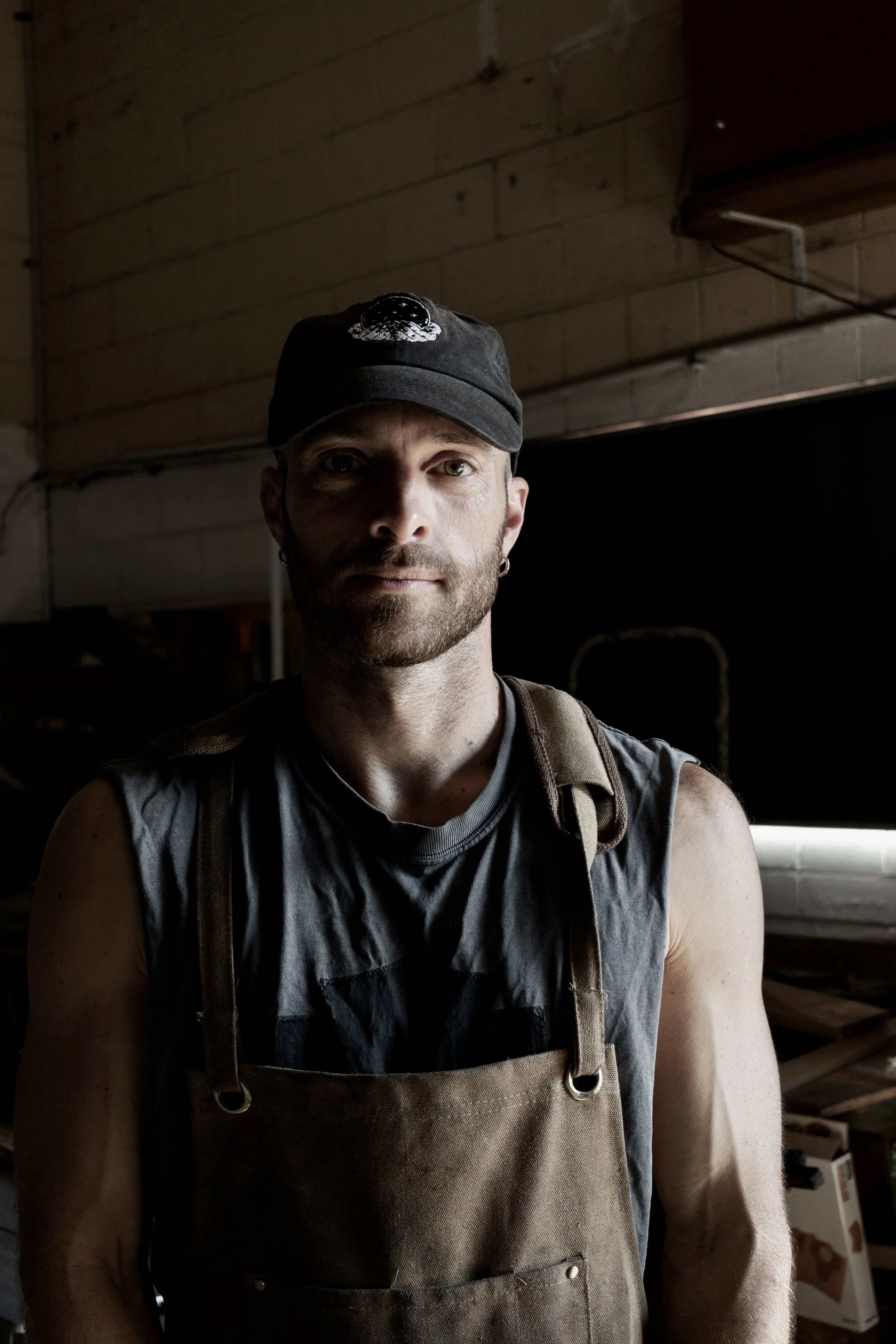
My name is Jason, and I'll be honest with you — the workshop probably shouldn't exist.
Not because it isn't real. It's very real. There's sawdust in places sawdust has no business being, the smell of char that never quite leaves, and a growing collection of timber that most people would call rubbish, and I call the good stuff. It exists because I never learned how not to make things. Not as a hobby. Not as a career plan. Just as the most fundamental fact of who I am — the way some people need to move, or talk, or disappear into music. I need to make.
What I make doesn't look like furniture is supposed to look.
I seek out the timber everyone else rejects. The splits. The knots. The pieces that came through floods and fires and decades of weather and are still, somehow, standing. Most makers see damage. I see a portrait of survival. To sand those marks away and call the result beautiful would be a lie — and the work doesn't have much patience for lies.
This is rooted in shou sugi ban, the ancient Japanese practice of charring timber to preserve it. But fire here isn't a technique. It's more like a collaborator. It removes what was never necessary and reveals what was always meant to remain. What survives the burning is the truth of the material. I just try not to get in the way of that.
The forms themselves come from somewhere harder to explain over a cup of coffee. Lost cities. Ancient temples. Symbols that predate the languages used to describe them. There is something in every person that remembers these places even when the mind has no record of them — a frequency the body recognises before the eye has time to name it. I don't design these pieces so much as receive them, and then spend however long it takes trying to build what arrived.
A scorched plank becomes a portal. A flood-worn slab becomes a ceremonial table. A piece of reclaimed brass holds a charge it picked up from somewhere it's been that I'll never know about.
No catalogues. No production runs. No two pieces alike, unless they’re a pair.
A perfect piece of timber has nothing to say. Neither does a perfect life. The beauty — always, without exception — is in what endured.
This is more than furniture. It is a return to what matters.